

Sustainable materials and products
Across our operations, we focus on improving the sustainability of the materials we use.
Packaging and products directly shape environmental health, consumer well-being and long-term business resilience. We work across the value chain to reduce waste, encourage reuse and improve efficiency.
Thinking strategically about sustainable materials
As a consumer-facing company serving millions of people every day, we have both a responsibility and an opportunity to enable more sustainable choices. Doing so strengthens trust, reduces exposure to chemicals of concern and meets evolving expectations from the stakeholders who rely on us.
Our extensive reach means even small operational shifts can deliver meaningful reductions in resource use and environmental impact. We work closely with suppliers to accelerate adoption of more efficient, resilient and lower-impact materials and systems, and we encourage responsible disposal and improved end-of-life outcomes, supported by clearer guidance, better system design and collaboration across the value chain. This helps protect environmental and human health, strengthens our business resilience and supports clearer, more consistent experiences for both colleagues and consumers.
Reducing plastic across CVS Health
At CVS Health, we strive to reduce and responsibly manage how we are using plastic across our business, while acknowledging that plastic is needed for safe care delivery and product quality.
The chemicals in plastics can have serious implications for human health. Exposure to them has been linked to health issues including obesity, thyroid disorder, infertility, respiratory illnesses, cardiovascular disease and more.
At the same time, plastics remain essential for safe care delivery, medication integrity and product quality. Balancing these realities requires a more flexible, system-level approach that reflects how plastics are used and managed across health care and retail environments.
We aim to eliminate or use less plastic, replace plastic with alternative sustainable materials and identify new strategies to increase recyclability and safer end-of-use disposal of the materials we use where we can. This enterprise-wide approach extends beyond product packaging to include operational, supply-chain and distribution plastics.
In 2025, we evolved our enterprise plastic strategy to better guide how we prioritize, sequence and scale action across the business. This shift moved us away from material‑specific goals and toward a more holistic plastic stewardship framework aligned with evolving state‑level regulations. This evolution focuses our ambition by grounding our actions in what will drive the greatest, most durable impact across our business. It reflects changes in the business and regulatory landscape, limitations in material availability and recycling infrastructure and positions us to focus on operational efficiency, supply chain collaboration and improving waste diversion, where feasible.
Our evolved strategy focuses on: Driving measurable progress in reducing virgin plastic use and improving end-of-life outcomes for plastics, while balancing health care quality, safety and consumer experience.
We are committed to transparency and accountability. Through our evolved plastics strategy, we are prioritizing programs that address plastic streams representing more than 75% of our plastic footprint, and we will refine this coverage over time. We will continue to report on our enterprise plastic footprint and our progress annually.
Learn more about our plastic footprint
Learn more about our store brand packaging sustainability efforts

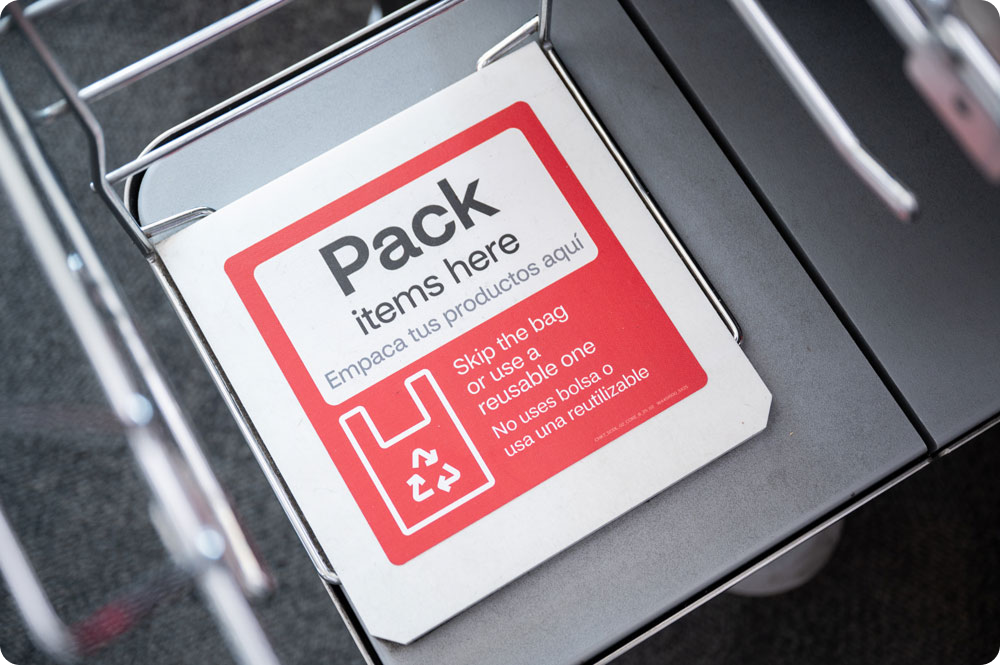
Rethinking single-use bags
Since 2020, CVS Health has collaborated with the Consortium to Reinvent the Retail Bag, managed by Closed Loop Partners’ Center for the Circular Economy. In 2025, the Consortium built upon the successes of the 2023 Bring Your Own Bag Pilots in Denver, Colorado and Tucson, Arizona, to scale bag waste reduction efforts in California, helping reduce plastic waste alongside hundreds of retailers and local stakeholders.


In 2025, we completed the rollout of a new recycling program to reduce waste behind the pharmacy counter that has diverted more than 7K metric tons of plastic since its launch in 2024.

Boosting the recyclability of medication bottles
Americans fill more than four billion prescriptions each year. The classic amber plastic medication bottle represents a significant opportunity for impact in reducing plastic waste. We continue to assess sustainable solutions, as medication bottles are often too small for traditional recycling processes and can contain personal health information, requiring more controlled disposal methods.
CVS Health has recently joined Closed Loop Partners’ Center for the Circular Economy’s Small Format Packaging Recovery Initiative, a collaborative effort aimed at improving the recyclability and recovery of small packaging items like medication bottles. Through this program, we are contributing to industrywide solutions that reduce waste and support more sustainable end-of-life pathways for these hard-to-recycle formats.
Reducing plastic in mail order fulfillment
In our mail order pharmacy operations, we are exploring sustainable packaging alternatives and optimized shipping efficiencies that protect product quality and safety. We continue to optimize our capabilities and network to reduce the distance between our patients and pharmacies.
A significant volume of medications shipped through our PBM mail order operations require temperaturecontrolled packaging. In 2024, we enhanced our cold chain shipping abilities at our San Antonio, Texas, fulfillment center, reducing the distance that packages need to travel to their destination and eliminating the additional packing material that had been required for longer distances.

Lowering paper consumption
Our efforts to improve the health of our planet include reducing our use of natural resources such as paper, which is sourced from ecosystems that support clean air, resilient communities and human well-being. We are focused on reducing the impacts of paper use across our operations by using digital tools that enhance efficiency, reduce waste and improve the experience for both colleagues and consumers. By shifting to more sustainable, technology-enabled solutions, we help protect forests and the essential natural resources they provide to support healthier people and a healthier planet.
Going digital with consumers
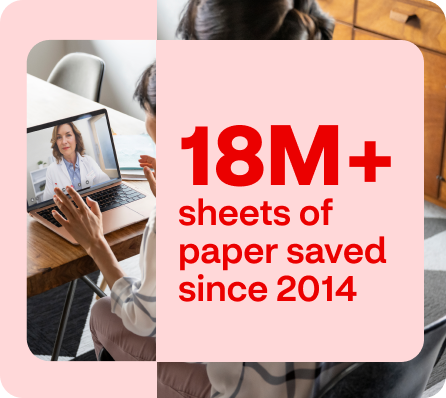
Our customers are more digitally engaged than ever. In 2016, we began offering a digital receipt opt-in for CVS Pharmacy customers. Since 2021, we have expanded this option to allow customers to choose a digital receipt, or no receipt, at nearly every sales transaction. We also ensure our receipt paper at all CVS Pharmacy locations is recyclable and free of ingredients with harmful health impacts. Our receipts have been BPA-free since 2012 and BPS-free since 2020 and 216M+ paper receipts have been eliminated.
Going digital with colleagues
Our managed print solution, Print+, continues to replace network printing systems in CVS Health offices, reducing paper consumption and adding a layer of security to print jobs. With over 1,300 Print+ printers currently enabled across more than 90 corporate office locations, the program saves millions of sheets of paper and supply costs.
We leverage QR code log-on instructions for all new-hire technology devices. Instructions on how to get started with us are always readily available digitally and this initiative has reduced printing by an estimated 320,000 color pages per year.
Waste management
Effective waste management is critical to protecting environmental and community health and our approach is key to how we’re approaching plastics. We are reducing waste across our operations by prioritizing prevention and improving recovery and disposal pathways.
Mail order plastic recycling
Our specialty pharmacy operations provide over nine million medication packages by mail each year for patients managing complex and chronic conditions. Small changes can make a big difference in packaging materials, so we’re optimizing shipping efficiencies while exploring safe, high-quality and sustainable alternatives.
Our Mount Prospect, IL mail order and specialty pharmacy facilities leverage robust waste management practices that enable the majority of site waste to be recycled annually, including nearly 20,000 pounds of plastic in 2025.
E-waste reduction
We refurbish, redeploy, re-sell and recycle IT equipment, with our more than 300,000 colleagues returning an average of nearly 12,000 items per month. A “scan and go” process lets colleagues easily and safely return computers and other tech items while avoiding the use of extra material to ship gear – reducing the risk of equipment damage and boosting recovery rates and timeframes.
Reducing product waste
We’ve reduced the number of store products that can no longer be sold by approximately 16%, through improved inventory management that better aligns supply with customer demand.
But for those products that still need to be disposed — whether due to seasonality, discontinuation or an approaching expiration date, we work to ensure that we are responsibly managing these products. We pursue liquidation, donation or recycling whenever possible to keep products out of landfills.
Managing pharmaceutical waste
We are reducing pharmaceutical waste across the company and improving product availability by reallocating inventory to retail pharmacy locations where it is more likely to be used before expiration. This work significantly reduces replenishment needs, packaging waste and the environmental budget associated with discarding millions of medications. In 2025, our non-refrigerated redeploy program moved more than 250,000 orders, avoided the disposal of valuable medication and generated $1 billion in savings for our business.
To extend these benefits to cold-chain products, we piloted a reusable, self-refrigerated packing cube in 2025. Each cube replaces traditional cold-chain packaging like cardboard, expanded polystyrene, cold bricks and labels, significantly reducing waste while improving product recovery. This program, which we will scale in 2026, has already generated $132,000 in value for the company.
These combined efforts help reduce pharmaceutical waste, lower emissions and eliminate unnecessary packaging while strengthening the resiliency of our supply chain.
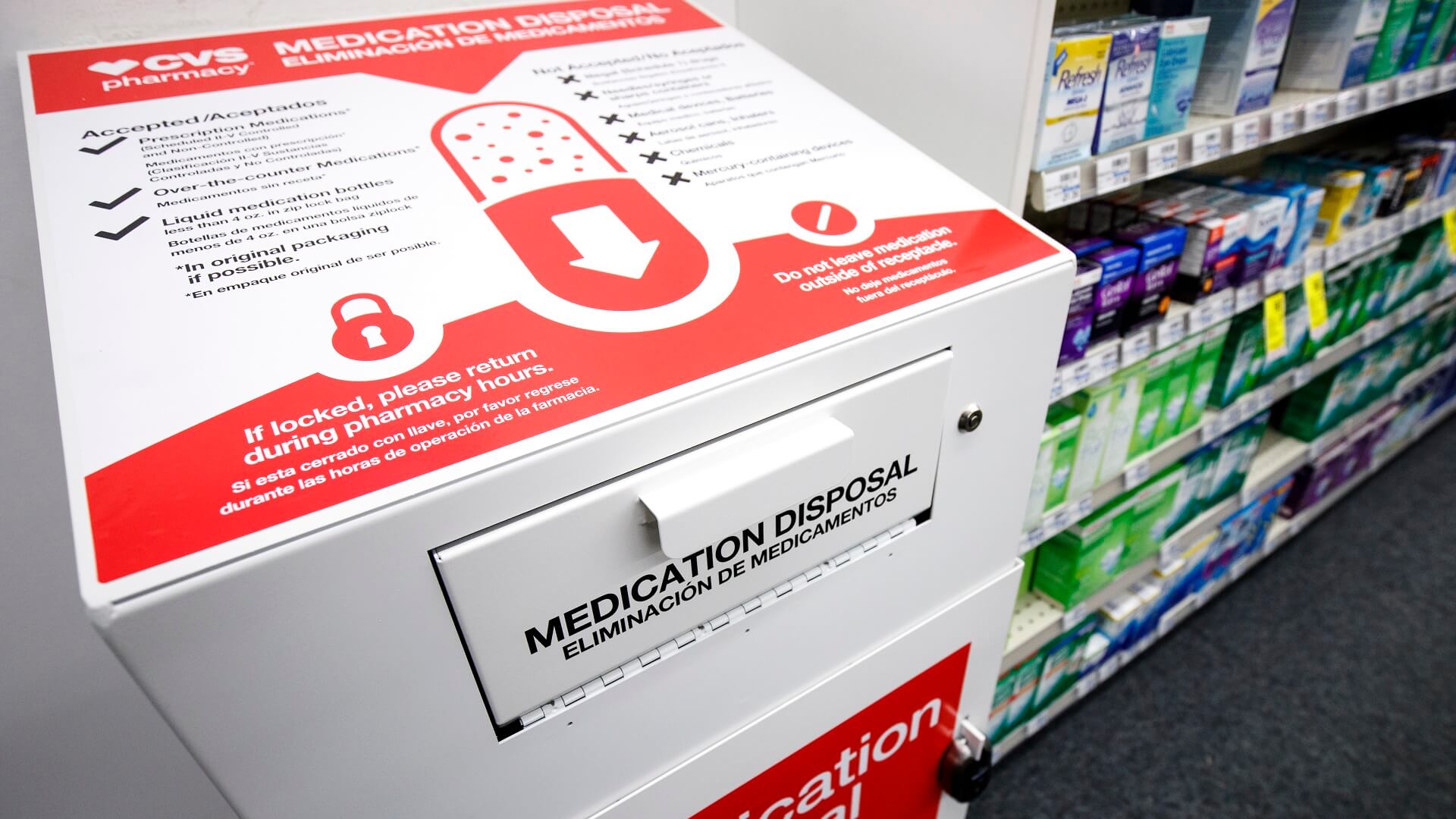
We offer safe medication disposal at more than 4,100 CVS Pharmacy locations and through donations of over 1,000 units to local police departments, together removing more than 10 million pounds of unwanted medications from communities.
Sustainable and ethical product offerings
Our holistic approach to customer health and well-being includes offering a variety of products — from personal and health care to food and beverage items — that are free from unwanted ingredients and take environmental impact into consideration.
CVS Health is committed to the ethical treatment of animals. In 2015, we announced a commitment to source cage-free eggs across our retail chain by 2025. We achieved this goal at the end of 2022. All eggs now offered in our stores are cage-free or free-range.
Learn more about our commitment to the ethical treatment of animals