

Climate and energy resilience
Reducing carbon emissions and building climate resilience in health care
Human and environmental health are intricately linked. We see firsthand how extreme weather can impact everyone, especially those with chronic conditions. Investing in climate resilience is essential to protecting our members, colleagues and communities from the rising frequency of severe weather, such as floods, wildfires and extreme heat. By implementing adaptive strategies, we ensure business continuity and secure a safer, more sustainable future for those that we serve.
Our path to decarbonization
In 2021, we became one of the first companies in the world to have our net-zero targets validated by the Science-Based Targets initiative’s (SBTi) net-zero methodology, setting us on the path to achieve net-zero emissions from our direct operations and across our value chain by 2050.
To protect the health of the planet and make progress on our sustainability commitments, we employ a strategic approach to managing our direct and indirect emissions. We continue to make progress on our decarbonization path for our Scope 1 and Scope 2 emissions, which we are executing against each year, while actively collaborating with suppliers to create Scope 3 emissions reductions.
Our work toward decarbonization focuses on significant investments in renewable energy, continuous improvement in operational efficiency and engagement across our enterprise and value chain.

Building energy resilience
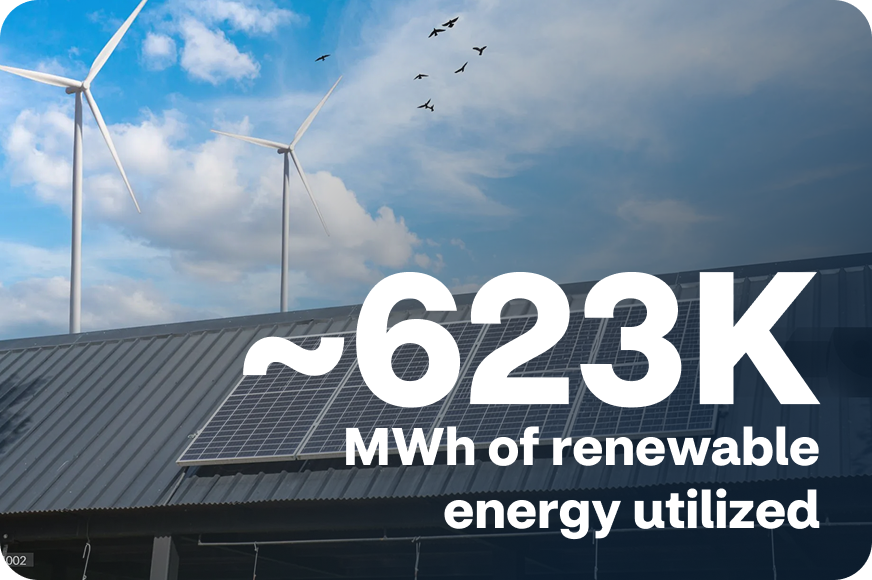
Given our significant footprint across the country, reliable and efficient energy systems are essential to maintaining safe, resilient operations for the communities we serve. We are reducing our overall energy demand and expanding our renewable energy portfolio to lower emissions, strengthen business continuity and support a more sustainable energy future for our enterprise.
Since 2022, we have completed seven large-scale investments in renewable energy. Alongside these major investments, we continue to advance a portfolio of smaller-scale solutions, including on-site solar, as well as testing and innovating to reduce our use of energy and to be more efficient with the energy needed to power our operations. To-date we have agreements in place to source more than 969,000 megawatt hours (MWh) of clean energy as they come online.
We continue to explore community solar options. For example, in 2025, more than 400 CVS Pharmacy® stores in Florida are enrolled in community solar as part of a program with Florida Power & Light Company.
New on-site solar panels at our Lumberton, New Jersey retail distribution center provide a portion of the facility's power.
Thirty-one stores in Massachusetts now use heat pumps, which save energy by transferring existing heat rather than generating heat. Through this pilot program, we saw a reduction of 1,200 MWh of energy.


Leveraging our logistics and transportation network
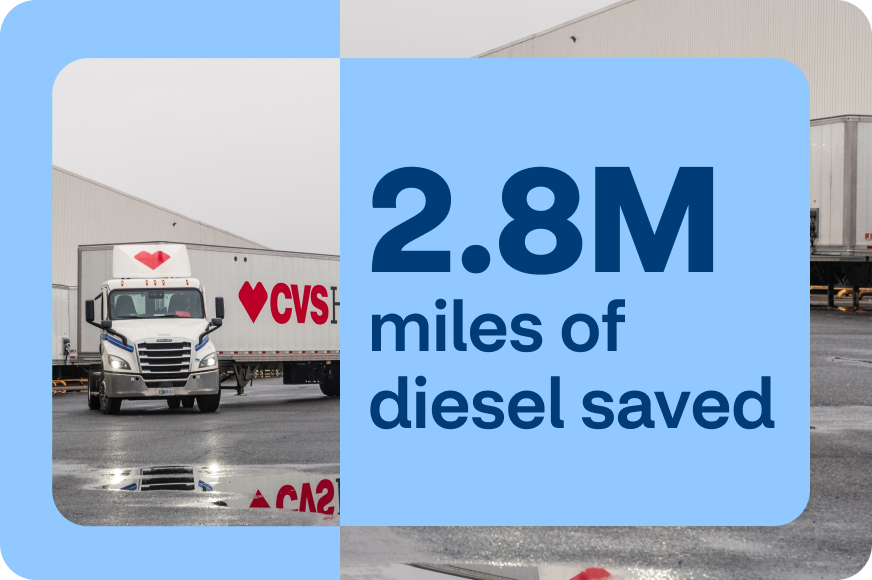
Our logistics and transportation network is essential to keeping our business running smoothly and is a meaningful way for us to achieve our decarbonization strategy. Modernizing our fleet and distribution systems helps lower emissions, improves efficiency and strengthens operational resilience in the face of growing weather and supply-chain disruptions. We are testing emerging technologies and new delivery models to understand their performance, scalability and return on investment. These insights will help reduce our footprint while maintaining reliable service for the communities we serve.
We opened a new bulk distribution center in Jersey City, New Jersey, expanding our supply chain capabilities and strengthening service to stores across the New York City region. This new hub enhances speed, efficiency and reliability to support one of our most complex markets.
Our On-Demand Delivery partner, Roadie, ensures that all delivery routes are optimized to reduce overall carbon footprint. All our Front Store and Rx On-Demand-Deliveries use sustainable packaging that is both 100% recyclable and contains 40% post-consumer content for every delivery.
In 2024, we launched our first fully electric truck at our Patterson, California distribution center.
In 2024, we electrified 100 trailer parking spots and upgraded all transportation refrigeration units at our La Habra, California distribution center to dual diesel and electric power, reducing emissions by an estimated five metric tons annually per unit.


Reducing emissions in our supply chain
Our Scope 3 emissions represent the majority of our total emissions and engaging suppliers is critical to making progress toward our goals. We work closely with them to encourage adoption of their own science-based emissions reduction targets and to support actions that reduce emissions across the goods and services we purchase. Through transparency, shared expectations and collaboration, we reduce emissions beyond our own operations and build a more resilient, lower-carbon value chain.
Learn more about how we’re engaging our suppliers in emissions reduction
Red Oak Sourcing, a joint venture of Cardinal Health and CVS Health, is one of the largest generic pharmaceutical sourcing entities in the U.S. Together, we are helping select Red Oak Sourcing suppliers collect GHG emissions data and establish science-based emissions reduction targets; these efforts have created a productive path toward reducing GHG emissions, preparing for regulatory expectations and building supply chain resiliency
In partnership with USPS, we’ve taken steps to lower our carbon footprint, by switching to their recommended recyclable packaging, keeping delivery as local as possible and standardizing addresses. About 97% of our USPS prescription deliveries — accounting for over half of all deliveries from our stores — are completed within a 50-mile radius from where they start. We are also working on expanding the scope to track emissions for Over-the-Counter Health Solutions and CVS.com packages sent via USPS.


Supporting patients and communities affected by extreme weather
Extreme environmental events adversely impact health outcomes for our patients and members. Heat waves are associated with increased hospital admissions, including for cardiovascular, kidney and respiratory disorders. More frequent extreme weather associated with climate change is also exacerbating long-standing air quality issues.
In 2024, we launched a first-of-its-kind, nationwide environmental health impact program to support people most vulnerable to extreme weather events. Through the program, our clinicians can proactively contact vulnerable patients with personalized recommendations to help them manage their conditions and mitigate potential impacts of extreme heat or air pollution.
Learn more about how we are safeguarding the people we serve during extreme weather events

-
CVS Health is committed to sharing progress toward achieving our SBTi approved, net zero emissions goals. Please refer to our environmental data to find relevant information pertaining to GHG emissions. This includes information documenting how our “net-zero emission” goals were determined to be accurate; how interim progress toward our goal is being measured; disclosure of independent third-party verification of greenhouse gas emissions; identification of our science-based targets emissions reduction pathway; and disclosure of the relevant sector methodology and third-party verification used for our science-based targets and emissions reduction pathway.
