After surviving two heart attacks, Bill Allison received news that stopped him in his tracks.
Unless he made immediate, lasting lifestyle changes and received a heart transplant, his doctor told him, he had little time left to live.
At age 65, Bill — a military veteran and retired truck driver from Waxhaw, North Carolina — made a decision that would change the course of his life. A longtime smoker, he quit cold turkey and stopped drinking alcohol.
“I realized I wanted to be around longer for my family and continue doing the things I love,” Bill says. “I knew I needed to change.”
While waiting for a donor heart, Bill focused on staying healthy and strong enough for surgery, knowing each day mattered.
Several months later, that opportunity arrived. In 2009, Bill underwent a successful heart transplant.
Today, at 81, Bill says he feels better than ever. He spends his days working on his more than two acre property, caring for his animals, and — most importantly — enjoying time with his wife of nearly 50 years, their children, and grandchildren.
“It’s never too late for a second chance at life,” he says.
The importance of long-term care
Bill is grateful to his organ donor and credits the many members of his health care team — physicians, surgeons, nurses, and pharmacists — who have supported him throughout his journey.
“I take a handful of prescription pills in the morning and a handful at night,” Bill says. “And I go for regular checkups and monitoring with my doctor.”
Those medications, including immunosuppressants, play a critical role in preventing organ rejection. For heart transplant recipients, medication adherence and ongoing monitoring are lifelong commitments essential to protecting the donated heart.
To help manage his ongoing care, Bill receives his specialty medications through CVS Specialty, with the option for convenient pickup at a nearby CVS Pharmacy—helping ensure dependable access to the life sustaining medications he has relied on over the years.
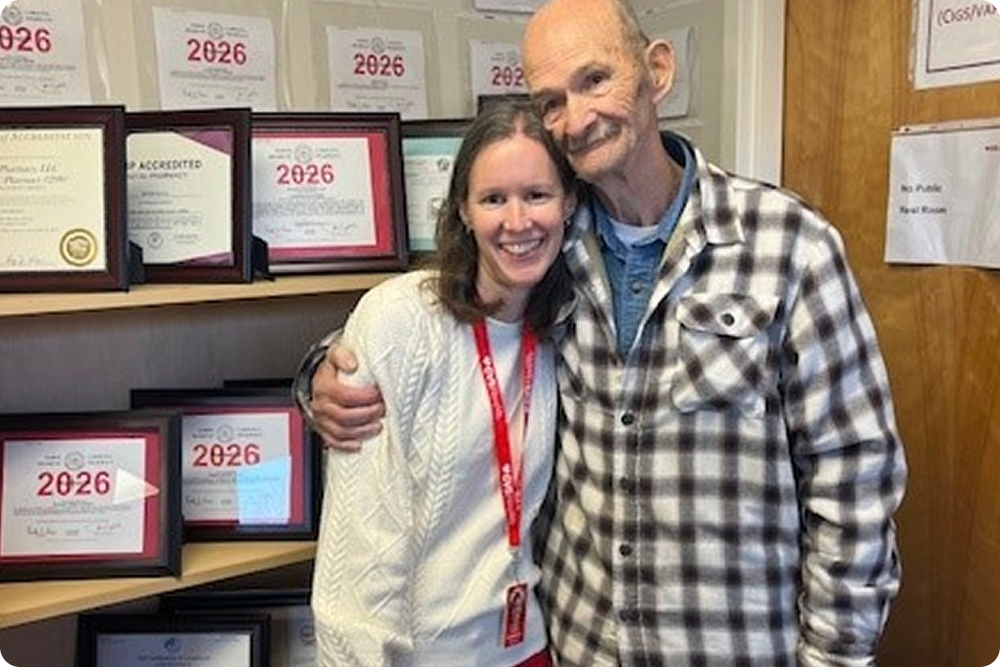
As part of that support, his CVS Specialty pharmacist, Amy Guard, PharmD, has been a consistent member of his care team, providing medication counseling and guidance to help him stay on track.
“Bill is remarkably resilient and motivated,” Amy says. “Adhering to his medication regimen and maintaining a healthy lifestyle have been major factors in his long term success.”
A message of hope – and the power of organ donation
Looking back, Bill says building a strong care support team — and listening to them — made all the difference.
He also hopes his story inspires others to consider organ donation.
“Organ donors are heroes,” he says. “They can save lives and give people like me a future.”
For anyone facing major health challenges, his advice is simple:
“Listen to your doctors, pharmacists, and care team,” Bill says. “It’s never too late to change and turn your life around. I would do it again in a heartbeat.”